A minimalist home is not an empty home. It is a home where each piece has a clear purpose, fits the space, or adds personal meaning. The best minimalist home decor essentials combine function, comfort, simple shapes, useful storage, natural materials, and a small number of well-chosen decorative pieces.
Minimalist decor can work in a small apartment, family home, bedroom, or modern living room. You do not need to remove everything you own or use only white furniture. Instead, the goal is to create a home that feels calm, useful, balanced, and easy to maintain.
What Is Minimalist Home Decor?
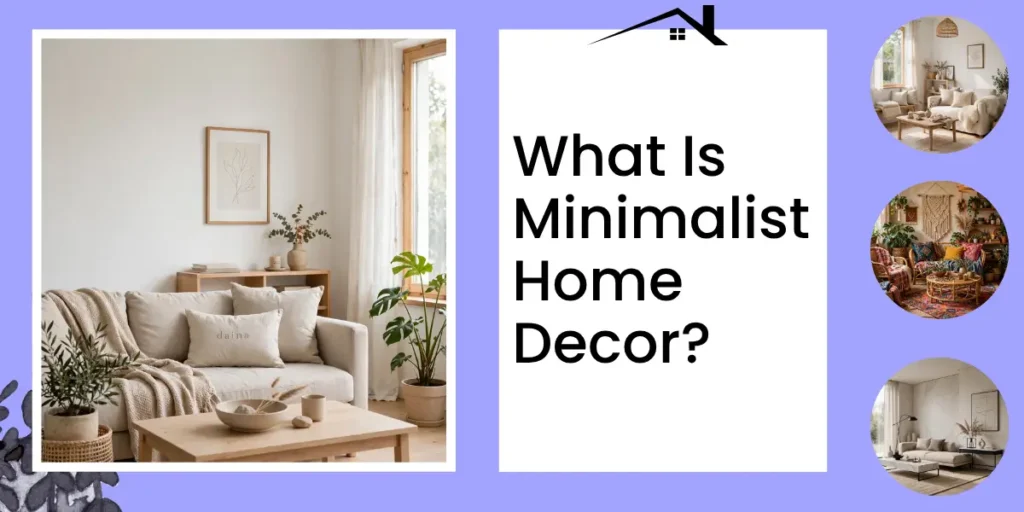
Minimalist home decor is an approach to interior design that uses fewer, more intentional pieces. It often includes clean lines, open space, simple furniture, restrained colors, natural materials, and limited decoration.
A key idea is quality over quantity. A room can contain personal items, artwork, books, plants, and decorative objects while still feeling minimalist when those items are selected and arranged with care. Interior design guidance also commonly links minimalism with purpose, balance, proportion, light, and reduced visual clutter.
Minimalism is also different from simply decluttering. Decluttering removes things you no longer need. Minimalist decorating goes one step further by asking how the things you keep work together in the room.
Minimalism Is Not an Empty Home
A completely empty room is not necessarily minimalist. Comfort still matters.
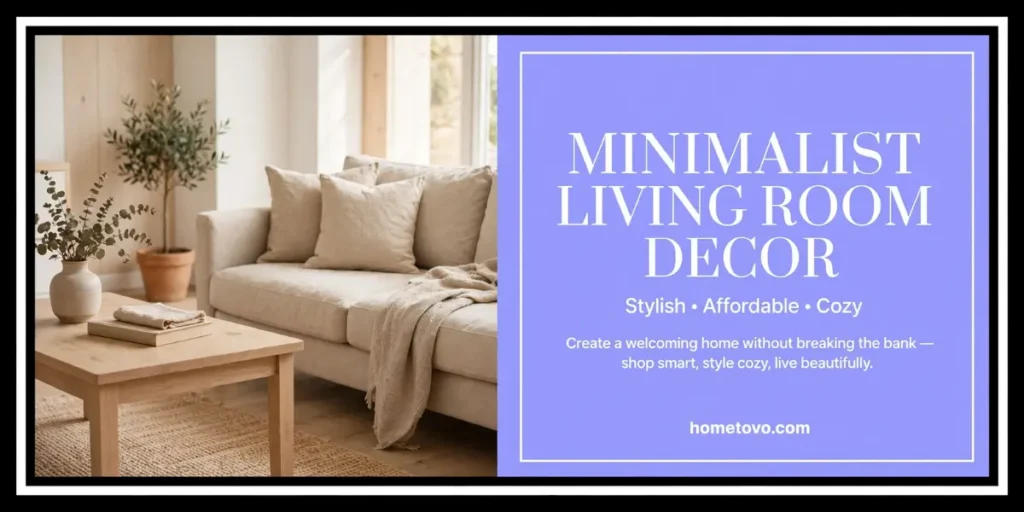
A minimalist living room may have a comfortable sofa, soft rug, coffee table, floor lamp, artwork, books, and a plant. The difference is that these pieces have enough space around them to be seen and used.
Minimalist Decor vs. Decluttering
Decluttering is mainly about reducing possessions. Minimalist decorating is about creating a thoughtful environment with the possessions that remain.
A useful question is:
Does this item serve a purpose, add beauty, or have genuine personal meaning?
If the answer is no, the item may not need to remain in the room.
25 Minimalist Home Decor Essentials
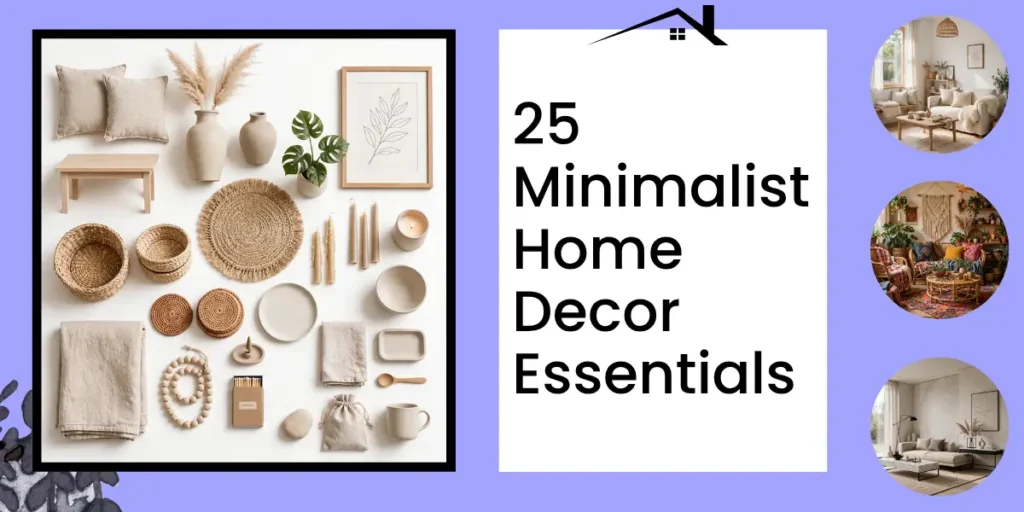
You do not need every item on this list. Think of it as a practical minimalist home essentials list that you can adapt to your home, budget, and lifestyle.
1. A Neutral Sofa
A neutral sofa creates a simple foundation for a minimalist living room. Choose clean lines, comfortable proportions, and a color that works with the rest of your interior. Beige, cream, taupe, gray, and soft earth tones are easy to style and keep the room visually calm.
- Choose a sofa that fits the room without blocking walking space.
- Prefer simple shapes over heavy decorative details.
- Use neutral colors for easy styling.
- Choose comfort and durability as well as appearance.
2. A Simple Coffee Table
A coffee table should provide useful space without making the living room feel crowded. Simple wood, stone, glass, or metal designs can work well with minimalist furniture. The right shape depends on the size of your sofa and the available floor space.
- Choose a size that leaves comfortable walking space.
- Round tables work well in smaller rooms.
- Use natural materials for warmth and texture.
- Keep only a few useful objects on the surface.
Essential Interior Inspiration
3. A Minimalist Dining Table
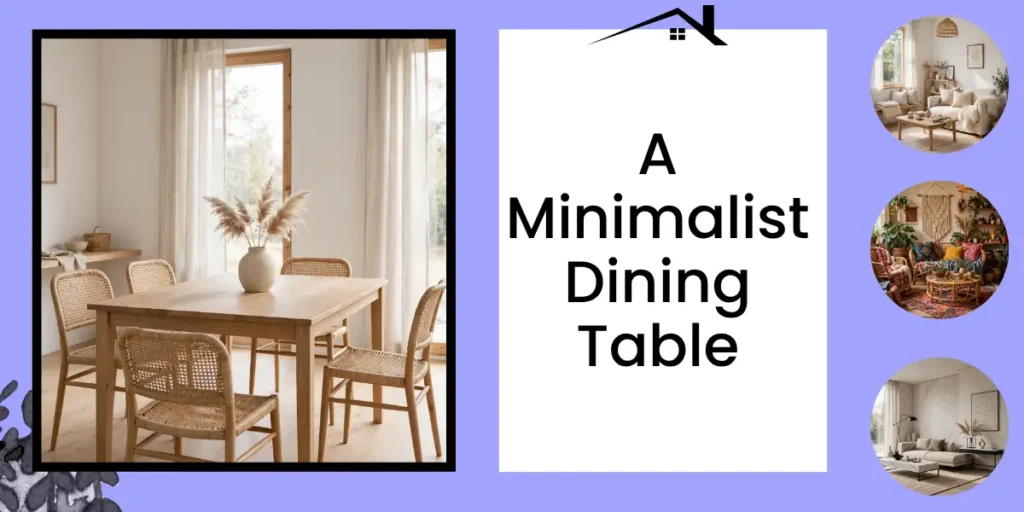
A minimalist dining table should be practical, comfortable, and properly sized for the household. Simple wood tables can add warmth, while stone and modern finishes create a cleaner contemporary look. Avoid choosing a table that is unnecessarily large.
- Select a size based on everyday use.
- Leave enough space for chairs and movement.
- Choose simple shapes and clean surfaces.
- Natural wood works well in warm minimalist interiors.
4. A Clean-Line Bed Frame
The bed is usually the main feature of a bedroom, so a simple frame can make the whole room feel more organized. Wood, upholstered, and low-profile designs can all suit minimalist bedroom decor. Avoid unnecessary details and oversized headboards.
- Look for clean, straight lines.
- Choose a frame that fits the bedroom properly.
- Match the frame with neutral bedding.
- Leave enough open space around the bed.
5. Neutral Bedding
Neutral bedding helps create a calm and comfortable minimalist bedroom. White, cream, beige, soft gray, and muted earth tones are easy to combine. Instead of adding many patterns, use different fabrics and textures to create visual interest.
- Choose breathable cotton or linen.
- Keep the main colors neutral.
- Use texture instead of many patterns.
- Add one simple throw for extra warmth.
6. A Minimalist Area Rug
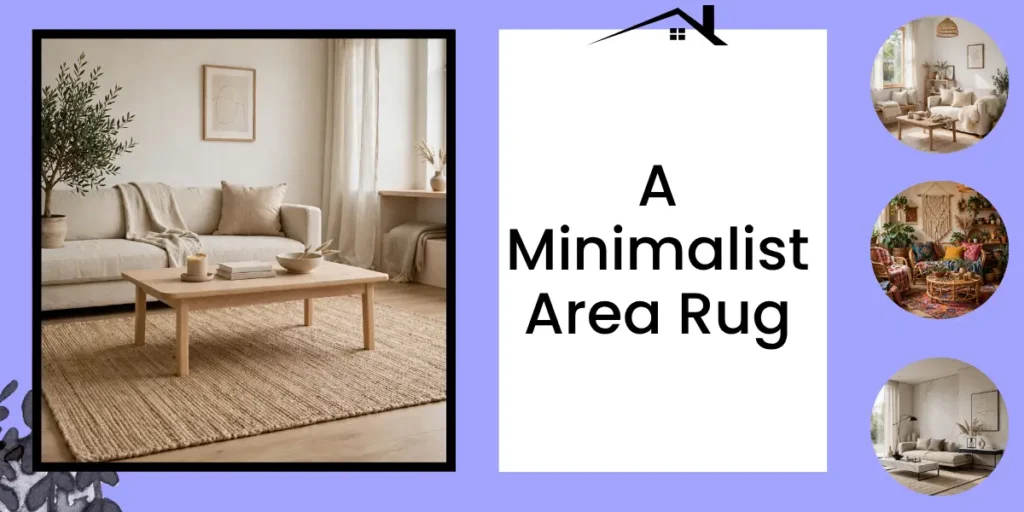
An area rug adds softness, warmth, and structure to a room. A simple rug can also help connect furniture pieces and define a seating or dining area. Wool, jute, and other natural textures can add character without creating visual clutter.
- Choose a rug that fits the furniture arrangement.
- Use solid or subtle patterns.
- Consider wool or jute for natural texture.
- Avoid rugs that are too small for the space.
7. Simple Curtains
Curtains can soften windows, control light, and add texture to a minimalist home. Linen and cotton curtains work well because they provide a relaxed appearance without heavy patterns. Neutral shades can blend naturally with walls and furniture.
- Choose simple fabrics with minimal patterns.
- Match the curtain color with the room.
- Use light fabrics where natural light is important.
- Hang curtains neatly for a finished appearance.
8. A Floor Lamp
A floor lamp provides useful lighting while also filling an empty corner without requiring another table or cabinet. Simple designs with clean silhouettes work especially well with minimalist decorating. Use the lamp for reading, ambient lighting, or both.
- Choose a simple and balanced shape.
- Place it where additional light is needed.
- Match its finish with other room materials.
- Avoid using too many lamps in one small area.
9. A Table Lamp
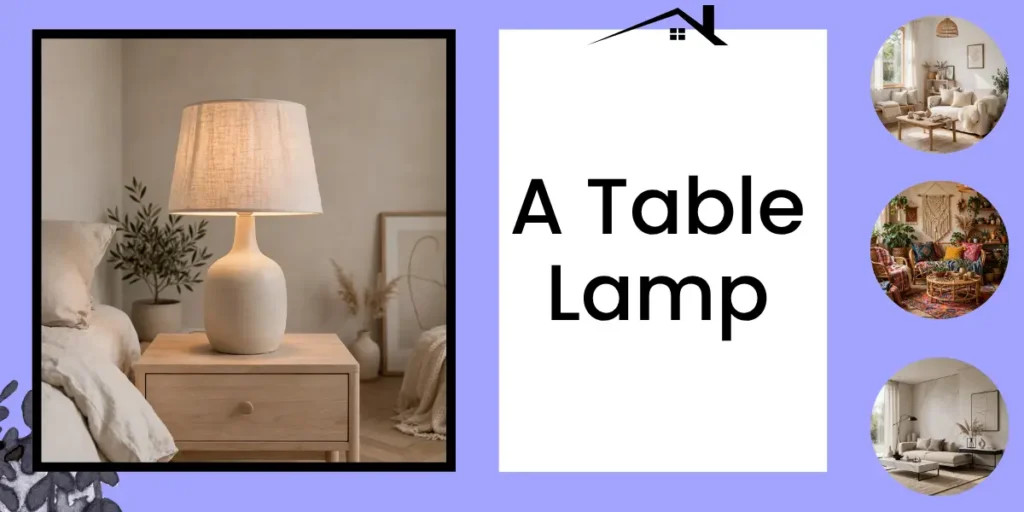
A table lamp can provide soft evening lighting while working as a small decorative feature. This makes it especially useful in bedrooms, living rooms, and home offices. Instead of filling a side table with accessories, let the lamp become the main feature.
- Choose a simple shade and base.
- Use warm light for a comfortable atmosphere.
- Place it on a nightstand, desk, or side table.
- Combine it with only one or two small objects.
10. A Simple Pendant or Ceiling Light
A ceiling light can provide general illumination while adding character to the room. Minimalist lighting does not have to look plain. A well-proportioned pendant or sculptural fixture can become a focal point without making the space feel busy.
- Choose a fixture that fits the room size.
- Use simple shapes and balanced proportions.
- Place pendant lights carefully over tables or counters.
- Let the light fixture stand out without adding excess decor.
11. Functional Closed Storage
Closed storage is one of the most useful minimalist home essentials because it keeps everyday belongings organized and surfaces clear. Cabinets, drawers, wardrobes, and sideboards can reduce visual clutter while keeping frequently used items easy to access.
- Give everyday items a specific storage place.
- Use cabinets for items that create visual clutter.
- Consider built-in storage for small spaces.
- Do not buy storage simply to keep unnecessary items.
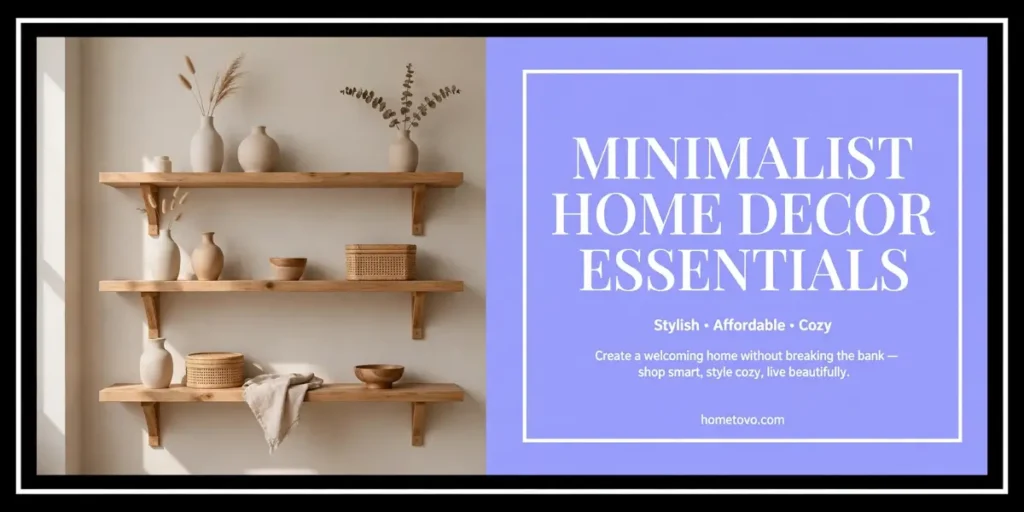
12. Minimalist Shelving

Open shelves are useful for books, plants, ceramics, and meaningful decorative objects. However, filling every shelf can quickly make a minimalist home look cluttered. Empty space is important because it allows individual pieces to stand out.
- Leave some shelves partly empty.
- Group objects instead of spreading them everywhere.
- Mix books with larger decorative pieces.
- Rotate items instead of continually adding more.
13. A Simple Mirror
A mirror can make a room feel brighter and more open while serving a practical purpose. A large mirror with a simple frame can work especially well in bedrooms, entryways, living rooms, and dining areas.
- Choose a frame that matches the interior.
- Use mirrors to reflect natural light.
- Consider a larger mirror for small rooms.
- Pay attention to what the mirror reflects.
14. Minimalist Artwork
Minimalist artwork gives a home personality without requiring many decorations. One carefully selected large artwork can often create more impact than a wall filled with small pieces. Choose artwork that you genuinely like rather than following a specific trend.
- Try photography, line art, or abstract pieces.
- Choose artwork that complements your color palette.
- Use one large piece as a focal point.
- Leave enough empty wall space around the artwork.
15. A Sculptural Vase
A vase is a simple way to introduce shape, texture, and natural elements into minimalist home decor. Ceramic, glass, stoneware, and matte finishes can work well. A vase can look attractive on its own or hold a few flowers or branches.
- Choose an interesting but simple shape.
- Use natural or muted colors.
- Display a few branches instead of large arrangements.
- Place it on a shelf, table, or console.
16. A Decorative Bowl or Tray

A decorative bowl or tray can combine beauty with everyday function. It can collect keys, remotes, jewelry, or other small belongings that might otherwise create clutter. This makes it a practical minimalist decorative object.
- Use it on a coffee table or console.
- Keep small everyday items together.
- Choose wood, ceramic, stone, or metal.
- Avoid filling the tray with unnecessary objects.
17. Ceramic or Stoneware Objects
Ceramic and stoneware pieces add texture and shape without requiring bright colors or complicated designs. A handmade bowl, small vessel, or simple sculpture can make a room feel more personal while keeping the overall look restrained.
- Choose one or two quality pieces.
- Look for natural or handmade textures.
- Use neutral colors for easier coordination.
- Display them where they can be appreciated.
18. Indoor Plants
Plants bring natural color and organic shapes into a minimalist interior. You do not need many plants to create an impact. One large plant in an empty corner can often work better than several small plants placed around the room.
- Choose plants that suit your available light.
- Use simple planters.
- Place larger plants in empty corners.
- Avoid turning every surface into a plant display.
19. A Throw Blanket
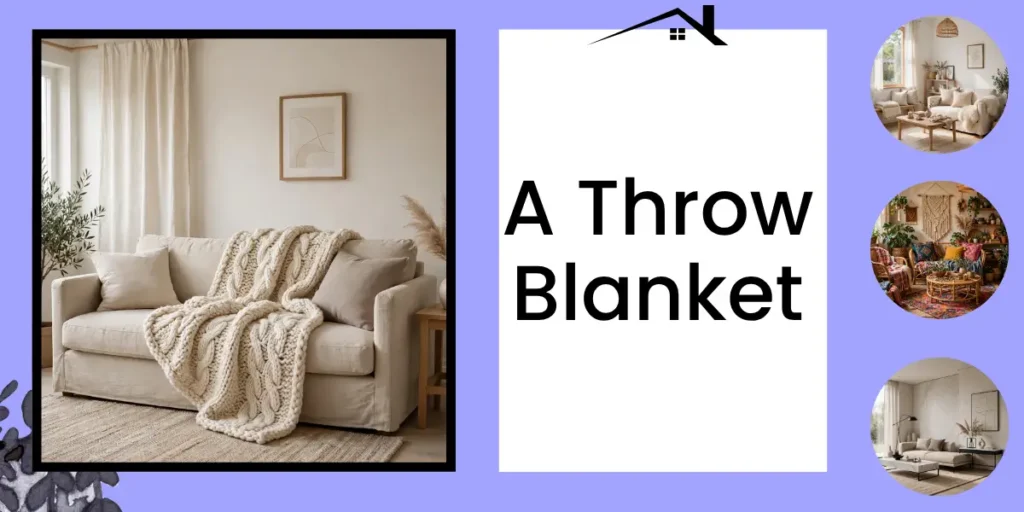
A throw blanket adds comfort, softness, and texture to a sofa, chair, or bed. Natural-looking fabrics such as cotton, linen, and wool work well with minimalist interiors. One carefully placed throw is usually enough.
- Choose a neutral or muted color.
- Use texture instead of bold patterns.
- Fold or drape it neatly.
- Choose fabric based on the season and climate.
20. Minimalist Cushions
Cushions make sofas and beds more comfortable while providing a simple way to introduce texture. Instead of using many different colors and patterns, choose two or three cushions that work together.
- Keep colors within the same palette.
- Mix textures rather than excessive patterns.
- Use only as many cushions as the furniture needs.
- Remove extras that make the sofa look crowded.
21. Candles or Simple Candleholders
Candles can add warmth and a soft evening atmosphere to minimalist home decor. Simple candleholders can also work as small decorative objects when they are not being used. Keep the arrangement limited so it does not become visual clutter.
- Choose simple candleholder designs.
- Group a small number together.
- Use candles safely and responsibly.
- Keep them away from curtains and other flammable materials.
22. Natural-Material Accessories
Natural materials help prevent minimalist interiors from feeling cold or flat. Wood, stone, ceramic, glass, linen, wool, and woven materials can add texture while keeping the overall design simple.
- Mix two or three natural materials.
- Use wood to add warmth.
- Add woven or textured pieces for softness.
- Avoid using too many different finishes at once.
23. A Minimalist Clock
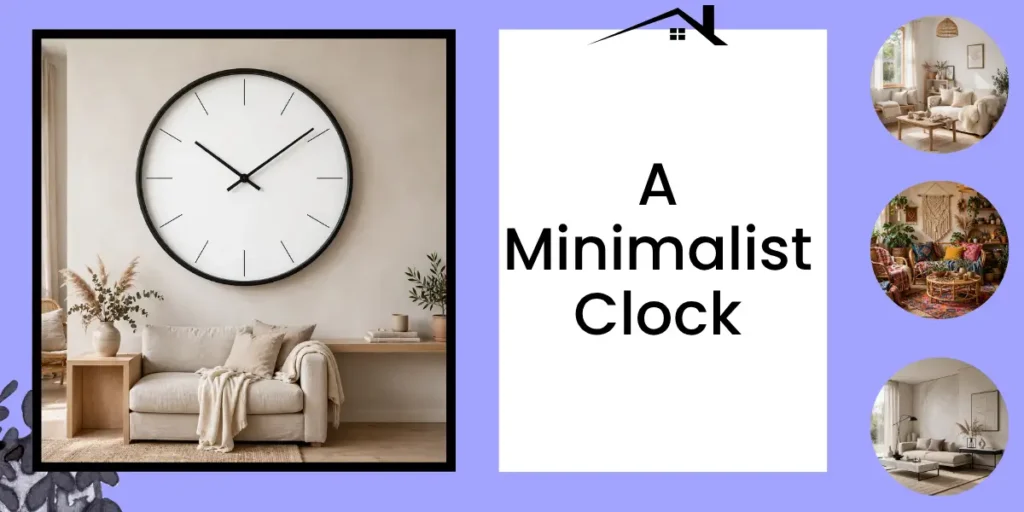
A clock can be both useful and decorative, especially in a kitchen, home office, bedroom, or living area. Choose a simple face that is easy to read and a frame that works with the room’s other materials.
- Select a clean and readable design.
- Avoid unnecessary decorative details.
- Match the frame with existing finishes.
- Place it where it can be easily seen.
24. Baskets for Everyday Storage
Baskets provide accessible storage for blankets, magazines, toys, laundry, and other frequently used items. They are especially useful when you want belongings to remain easy to reach without leaving them scattered around the room.
- Use baskets for items you access regularly.
- Choose natural woven materials for warmth.
- Keep similar items together.
- Avoid using baskets to store things you never use.
25. One Meaningful Personal Object
Minimalism should still feel personal. A family photograph, handmade item, travel souvenir, heirloom, or favorite book can give a home character and emotional value. The goal is thoughtful selection, not removing everything that makes the space personal.
- Choose objects that have real meaning to you.
- Display important pieces where they can be appreciated.
- Avoid keeping decorations only because you feel obligated to.
- Let a few personal objects tell your story.
The 5 Core Principles Behind Minimalist Decor
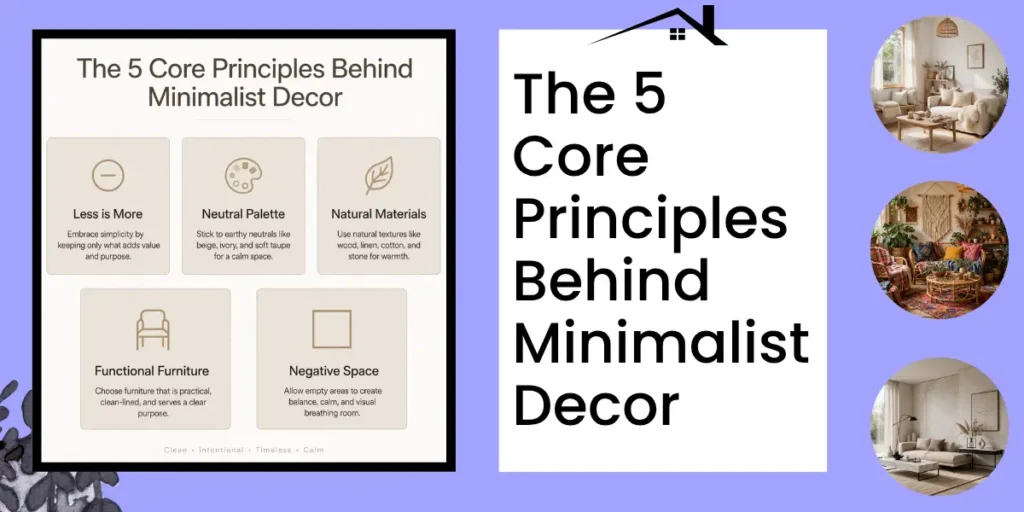
1. Choose Function Over Excess
Before adding something to a room, consider what it does.
A side table can hold a lamp. A basket can store blankets. A mirror can reflect light. A tray can organize small objects.
When one item serves several useful roles, the room can stay simpler.
2. Choose Quality Over Quantity
Minimalism works best when the pieces you keep are useful and durable.
You do not have to buy expensive furniture. The principle is to buy carefully instead of repeatedly replacing things that do not work.
3. Leave Room for Negative Space
Empty space is part of the design.
A clear section of wall, an open area on a shelf, or space around a chair can make a room feel more balanced. Minimalist interiors often depend on proportion, light, and space as much as they depend on furniture.
4. Use Texture Instead of Too Many Patterns
If you want a neutral room to feel warm, add texture before adding lots of color.
Try wood, linen, wool, ceramic, woven baskets, stone, or textured rugs.
5. Give Every Decorative Object a Reason
A decorative item does not need a practical function. It can simply be beautiful or meaningful.
But if several objects serve no purpose and are rarely enjoyed, removing some of them may improve the room.
How to Choose a Minimalist Color Palette
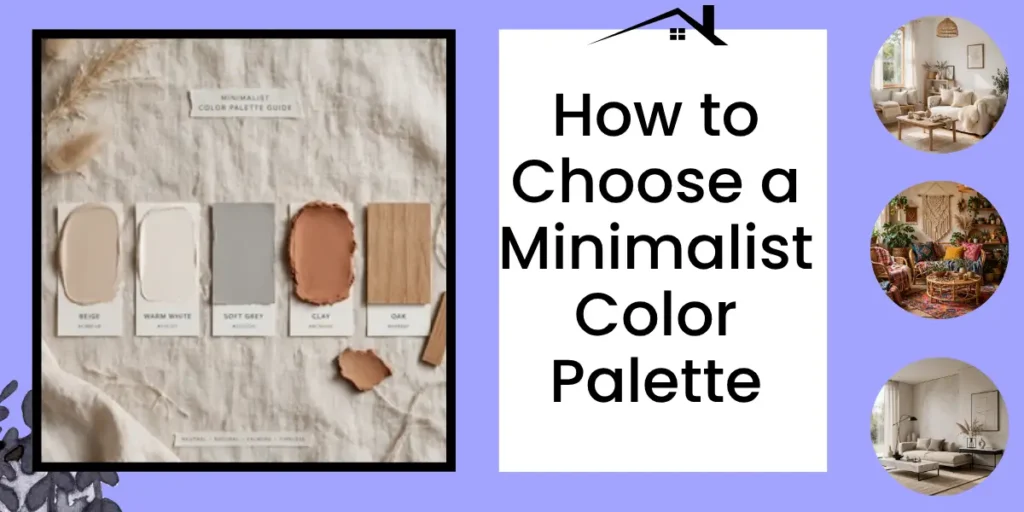
A minimalist palette does not have to mean pure white.
White and Off-White
These shades create a light base and work well with wood, stone, and natural fabrics.
Beige and Warm Neutrals
Warm neutrals can make minimalist interiors feel more comfortable and lived-in.
Soft Gray
Gray works well with wood, black accents, white walls, and muted colors.
Earth Tones
Olive, clay, sand, terracotta, and muted brown can introduce color without making the room feel busy.
Black as an Accent
Black can define furniture, lighting, frames, or hardware. Use it as a supporting color rather than allowing it to dominate every surface.
Minimalist Materials That Add Warmth
Natural materials are useful when you want a simple room to feel comfortable.
- Natural wood
- Linen
- Cotton
- Wool
- Jute
- Ceramic
- Stone
- Glass
- Metal
The best combination depends on the room. For example, a wood table with linen curtains and a wool rug creates several layers of texture without requiring many accessories.
Minimalist Home Decor Essentials by Room

Minimalist Living Room Design
A practical minimalist living room design might include:
- A comfortable sofa
- A simple coffee table
- One area rug
- Layered lighting
- Closed storage
- One large artwork
- One plant
- A small number of decorative objects
Keep the main walking paths clear. Avoid pushing every piece of furniture against a wall simply because there is empty space.
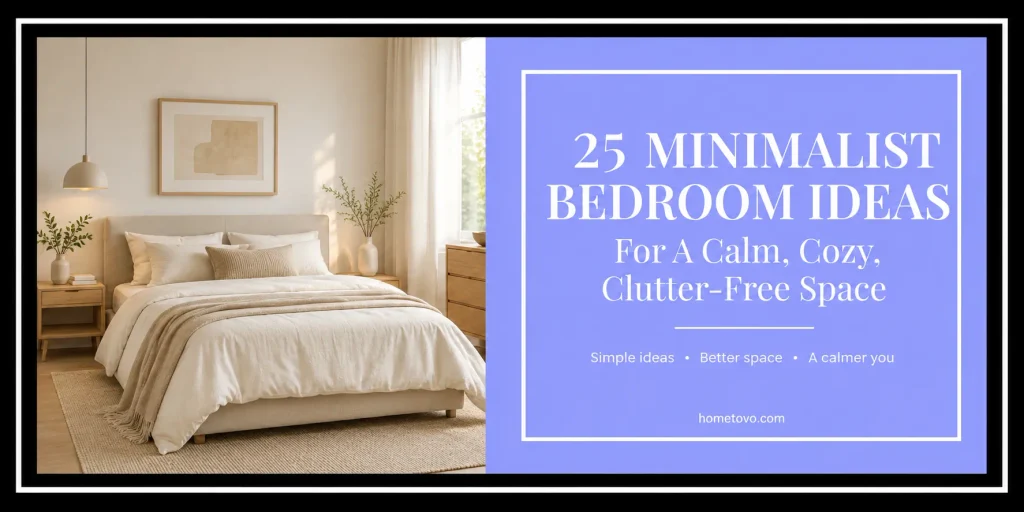
Minimalist Bedroom Essentials
A minimalist bedroom needs less than many people think.
Start with:
- Bed frame
- Comfortable mattress
- Quality bedding
- Nightstands
- Lamps
- Curtains
- Storage
- One or two personal touches
The bedroom should support rest, so avoid turning every available surface into a display area.
Minimalist Dining Room Essentials
A dining room can remain simple with:
- Dining table
- Comfortable chairs
- Pendant light
- Small centerpiece
- Practical storage
A bowl, vase, or branch arrangement can work as a centerpiece without filling the entire table.
Minimalist Kitchen Essentials
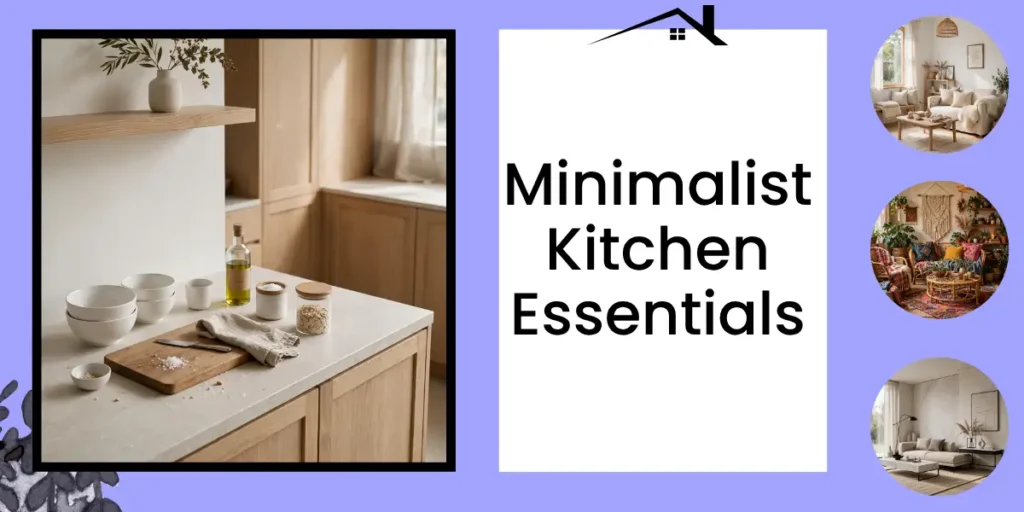
The kitchen benefits from practical minimalism.
Keep the items you use regularly accessible, while storing duplicates and rarely used tools elsewhere.
Clear counters do not mean empty counters. A coffee maker, cutting board, fruit bowl, or other frequently used item can remain visible if it supports your routine.
Minimalist Bathroom Essentials
A simple bathroom can use:
- Neutral towels
- Mirror
- Practical storage
- Small tray
- Simple containers
- One plant where suitable
The aim is to make cleaning and daily routines easier.
Best Minimalist Design Ideas for a Modern Home
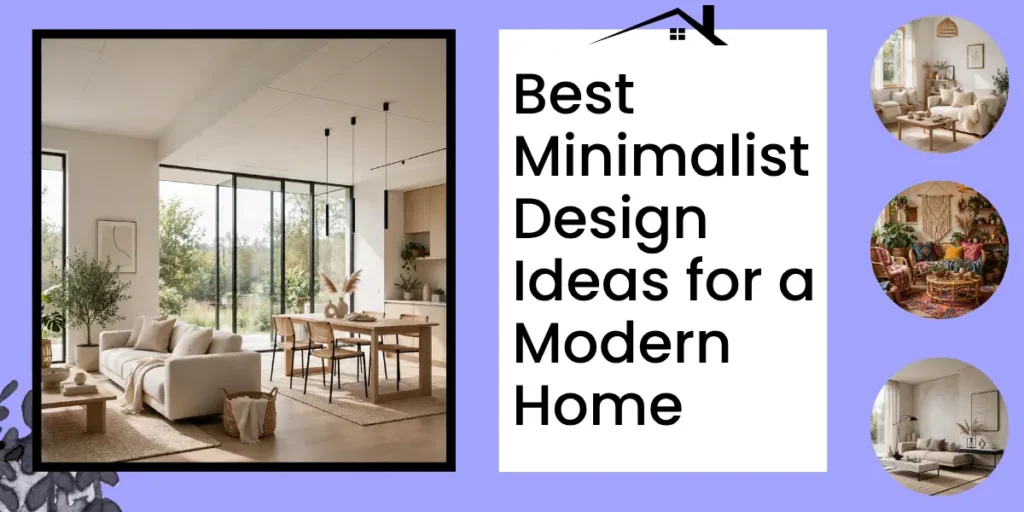
Some of the best minimalist design ideas are simple changes rather than expensive purchases.
Use One Statement Piece
Choose one strong artwork, light fixture, chair, rug, or sculptural object instead of several competing focal points.
Create More Negative Space
Remove unnecessary items from shelves, tables, and countertops.
Hide Everyday Clutter
Use drawers, baskets, cabinets, and trays to create simple homes for frequently used items.
Mix Warm and Cool Materials
Combine wood with stone, linen with metal, or ceramic with glass.
Use Oversized Decor Carefully
One large object can sometimes work better than a collection of small objects.
Repeat Materials
Repeating wood, metal, or fabric finishes throughout the room helps the design feel connected.
Bring in Plants
A plant can add life and organic shape without changing the overall simplicity of the room.
Minimalist Furniture Ideas That Actually Work

The right minimalist furniture ideas focus on proportion and function.
Choose furniture that:
- Fits the room
- Supports daily activities
- Provides useful storage
- Has a simple silhouette
- Can remain useful for years
- Does not block natural movement
Multifunctional furniture can be particularly useful in smaller homes. A storage ottoman, extendable dining table, or bed with drawers can reduce the need for additional furniture.
How to Decorate a Minimalist Home Without Making It Feel Empty
A minimalist home can feel warm when you use texture, light, natural materials, plants, artwork, and personal objects.
Start with the larger pieces. Once the furniture works, add only enough decoration to give the room character.
For example, a living room does not need ten accessories. A rug, floor lamp, artwork, plant, and one ceramic object may be enough.
The room should feel comfortable first and minimalist second.
How Many Decorative Objects Should a Minimalist Home Have?
There is no official number.
The right amount depends on the size of the room, the furniture, the objects themselves, and how much visual activity you prefer.
A useful test is to look at each surface from across the room. If several objects compete for attention, remove one or two and see whether the composition improves.
Minimalist design is more about intentional selection than following a fixed object count.
Minimalist Home Essentials List: What Should You Actually Buy?
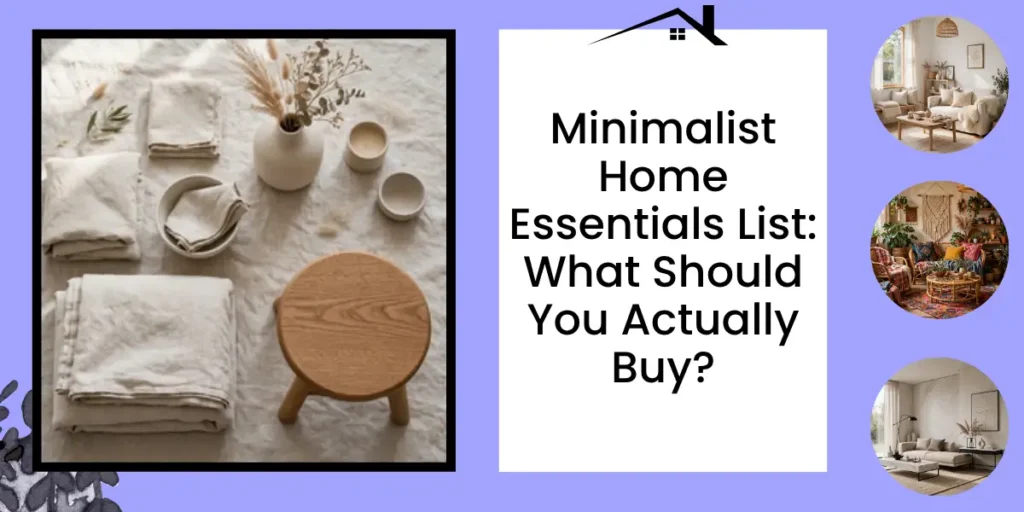
If you are starting from scratch, you do not need to purchase everything at once.
Living Room
- Sofa
- Coffee table
- Rug
- Lighting
- Storage
- Artwork
- Plant
Bedroom
- Bed
- Mattress
- Bedding
- Nightstand
- Lamp
- Curtains
- Storage
Kitchen
- Basic cookware
- Everyday dishes
- Food storage
- Cutting boards
- Essential appliances
- Simple countertop accessories
Bathroom
- Towels
- Storage
- Mirror
- Basic accessories
This is a practical minimalist home essentials list, not a rulebook. Your actual needs should guide what you buy.
Modernist Minimalist Living Room Ideas
A modernist minimalist living room often relies on strong shapes, open space, practical furniture, and a restrained material palette.
Try:
- A low-profile sofa
- A simple coffee table
- Architectural lighting
- Large-scale artwork
- Natural wood
- Stone or ceramic accents
- Limited decorative objects
- Open floor space
The result should feel structured without becoming uncomfortable.
Common Minimalist Decorating Mistakes to Avoid
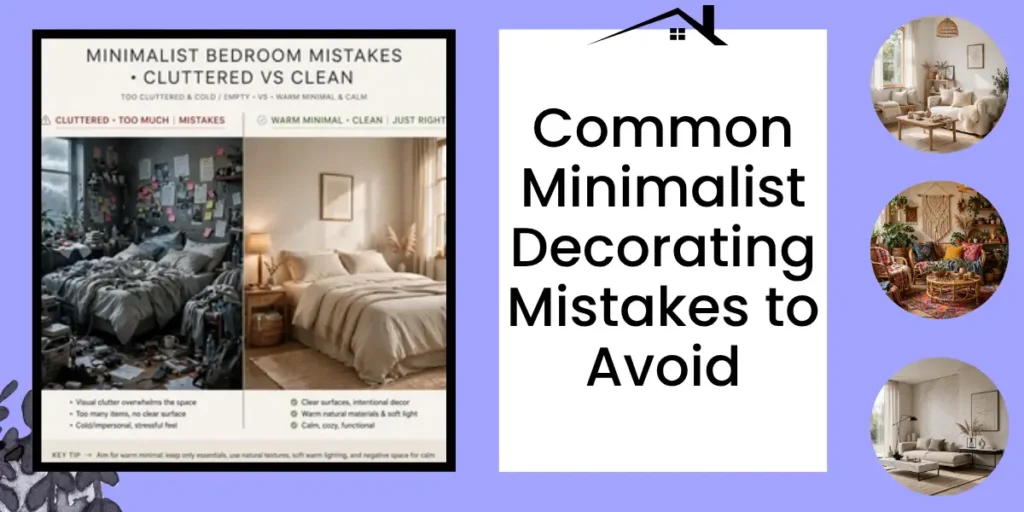
Making Everything White
White can be beautiful, but too much of it can make a room feel flat. Add wood, fabric, plants, or muted colors.
Buying Too Many “Minimalist” Accessories
A minimalist label does not make an object necessary.
If you keep buying decorative items, you can create the same clutter you were trying to avoid.
Removing All Personality
Family photographs, books, artwork, and meaningful objects can belong in a minimalist home.
Ignoring Storage
A beautiful room becomes difficult to maintain if everyday belongings have nowhere to go.
Choosing Style Over Comfort
A sofa may look perfect in a photograph but still be uncomfortable. Your home needs to work for real life.
Filling Every Empty Surface
Empty space is not wasted space. It gives the eye somewhere to rest.
What Do Minimalists Throw Away Every Week?
There is no universal rule that says minimalists must throw away a certain number of items every week.
Some people use regular decluttering sessions to prevent unnecessary belongings from building up. Useful categories include broken items, duplicates, expired products, unwanted packaging, unused accessories, and things that no longer fit your life.
The better goal is to reduce unnecessary accumulation rather than constantly throwing things away.
What Is the 30/30 Rule for Minimalists?
The 30/30 Rule is commonly associated with The Minimalists. Their version suggests waiting 30 hours before buying an item that costs more than $30. For purchases of $100 or more, they suggest waiting 30 days. The purpose is to create time between wanting something and buying it, which can reduce impulse purchases.
It is a personal purchasing strategy, not an official rule that every minimalist follows.
What Are the 100 Things a Minimalist Needs to Have?
There is no official list of 100 things every minimalist needs.
Minimalism is personal. A family with children, a remote worker, a cook, and someone living alone will have very different needs.
Instead of trying to own exactly 100 items, build your home around your actual daily routines.
The most useful essential items for everyday life are the things you use regularly, support your responsibilities, and make your home comfortable.
Do People With ADHD Like Minimalism?
There is no simple answer because people with ADHD have different preferences and needs.
However, organization can be challenging for some people with ADHD, and reducing clutter or creating simple systems may make a home easier to manage. CHADD recommends practical approaches such as dividing spaces into zones, using short organizing sessions, and creating simple systems.
So, rather than saying that people with ADHD “like minimalism,” it is more accurate to say that some people may benefit from a simpler and easier-to-maintain home environment.
Minimalist Home Decor on a Budget

You do not need a large budget to create minimalist home decor.
Start by using what you already own.
Remove duplicates, clear unused surfaces, rearrange furniture, and group similar items together. Then decide what the room actually needs.
When you do buy something, prioritize pieces that solve a real problem or will remain useful for a long time.
A second-hand wooden table, simple ceramic vase, quality used mirror, or well-made lamp can fit a minimalist home just as well as an expensive designer piece.
Minimalist Decorating Checklist
Before buying or keeping an item, ask:
- Does it serve a clear purpose?
- Do I already own something similar?
- Will I use it regularly?
- Does it fit the room?
- Does it work with my existing colors?
- Is it comfortable or useful?
- Is it durable enough for my needs?
- Does it add beauty or personal meaning?
- Would I still choose it if I had to buy it today?
If several answers are no, pause before bringing the item into your home.
Final Thoughts
The best minimalist home decor essentials are not the things that make your home look empty. They are the pieces that make your home work better.
Start with comfortable furniture, useful storage, good lighting, quality textiles, and a few natural materials. Then add artwork, plants, and personal objects that you genuinely enjoy.
You do not need to follow a strict minimalist home essentials list or remove every nonessential item. A successful minimalist home gives you enough structure to stay organized while leaving enough space for comfort, personality, and everyday life.
FAQs About Minimalist Home Decor
Q1. What are the essentials of minimalist home decor?
The main essentials include functional furniture, comfortable bedding, useful storage, simple lighting, rugs, curtains, mirrors, plants, artwork, and a small number of meaningful decorative objects.
Q2. What are some essentials every minimalist home should have?
A comfortable place to sit, a good bed, useful storage, appropriate lighting, basic dining furniture, practical kitchen items, and a few pieces that make the home feel personal are good starting points.
Q3. How do I make my home look minimalist?
Start by removing unnecessary clutter, then simplify the furniture layout, create storage for everyday items, choose a consistent color palette, and leave some surfaces and wall areas open.
Q4. What colors are best for minimalist home decor?
White, cream, beige, gray, soft brown, muted green, and other restrained shades work well. You can also use darker colors as accents.
Q5. What materials work best in minimalist interiors?
Wood, linen, cotton, wool, stone, ceramic, glass, jute, and simple metals can all work well. Combining several textures prevents a neutral room from feeling flat.
Q6. How do I make minimalist decor feel warm?
Use natural wood, soft textiles, warm lighting, plants, artwork, and meaningful personal objects. Minimalism does not require a cold or sterile appearance.
Q7. How many decorative objects should a minimalist room have?
There is no fixed number. Start with a few pieces and add only what improves the room. Leave enough space around each object so the room does not feel crowded.
Q8. Is minimalist decor expensive?
No. Minimalism is mainly about intentional choices, not expensive products. You can create a simple home by decluttering, reusing existing pieces, buying second-hand, and purchasing fewer items over time.